

 6 mins read
A missing or incorrect UPC label can stop a product listing from going live, get an item rejected by a retailer, or cause it to scan as the wrong product at checkout.
For a business preparing stock for sale, this is not a minor technical detail. It can delay a launch or create inventory errors that take time to trace back.
Sellers often reach this problem only once a marketplace or retailer asks for a UPC they do not have, or when they realise their existing codes are set up incorrectly.
This article explains what a UPC label is, what a UPC is, why businesses use them, and how to generate and print one correctly.
What Is a UPC Label?
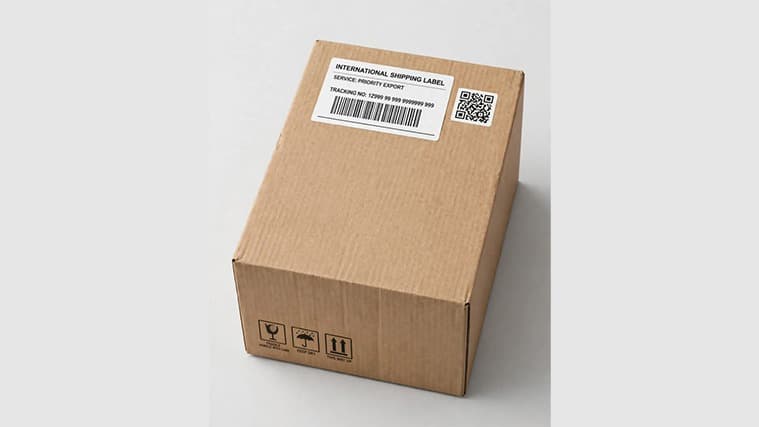
A UPC label is a printed sticker or tag placed on a product that displays a scannable barcode along with a unique 12-digit number underneath it.
UPC stands for Universal Product Code. It is the standard used across the United States, Canada, and in many international retail and e-commerce systems to identify individual products.
The label itself is the physical, printed version. It includes:
(i) The barcode (a series of black bars and white spaces)
(ii) The 12-digit number printed below the barcode
(iii) In some cases, the product name or a batch reference, depending on the retailer's requirements
When a cashier or warehouse scanner reads the barcode, it pulls up the product information linked to that number, such as price, description, and stock level.
What Is a UPC Code?
A UPC is the unique 12-digit number that the barcode represents.
It is not the label itself; it is the identifier behind it. Each UPC is made up of:
(a) A company prefix, issued by GS1, the global body that manages product numbering standards
(b) A product reference number, assigned by the business to identify a specific item
(c) A check digit, calculated automatically to confirm the code was scanned or entered correctly
People Also Read: SKU Number: What is the SKU Number, Examples and How to Create One
What Do You Need a UPC Label For?
1. Selling through retail stores.
Most physical retailers require a scannable UPC on any product before they will stock it.
This allows the store's point-of-sale system to recognise the item automatically.
2. Listing on marketplaces.
Many online marketplaces ask sellers to provide a UPC when listing a new product, particularly for categories that are not already in their catalogue.
If you are building out product listings for an online marketplace, having accurate UPCs ready in advance saves time during setup.
3. Inventory tracking.
A UPC gives every product a single, consistent identifier. This makes it easier to track stock levels, reorder points, and sales history without relying on manual entry.
4. Reducing errors at checkout.
Scanning a barcode is faster and more accurate than a cashier or warehouse staff typing in a product code by hand.
5. Supporting order fulfilment.
When a business ships to many customers, a consistent product identifier makes it easier to confirm that the right item is picked, packed, and sent out.
What Are the Advantages of UPC Labels?
1. Scanning takes a fraction of the time that manual entry does, which matters at checkout, during stocktaking, and when packing orders for delivery.
2. Each product has one consistent code; it is easier to spot when inventory records do not match what is actually on the shelf.
3. Retailers and marketplace buyers are often more confident purchasing from a business whose products are properly labelled and identifiable.
4. With a unique code per product, sales and inventory reports become more reliable, since the business is not depending on inconsistent product names or descriptions entered by different staff members.
5. Some retail chains and marketplaces will not list a product at all without a valid UPC, so having one opens up more sales channels.
How Do You Make a UPC Label?
1. Choose a Barcode Generator
Barcode generation software or online tools convert your 12-digit UPC into a scannable barcode image. Many of these tools also let you preview how the barcode will look at different sizes.
2. Get the Sizing and Placement Right
A UPC label needs to be large enough and clear enough for a scanner to read reliably. Placing it on a flat, visible part of the packaging, rather than on a curved edge or a seam, reduces scanning errors at checkout or during fulfilment.
3. Test the Barcode Before Mass Printing
Before printing a full batch of labels, it helps to scan a sample using a barcode scanner or a smartphone scanning app to confirm the code reads correctly and matches the intended product.
Do You Need a UPC Code for Your Business?
Not every business needs one.
If you sell directly to customers through social media, WhatsApp, or your own website without listing on a retailer's system or a marketplace that requires it, a UPC may not be necessary.
However, a UPC is generally worth getting if:
(i) You plan to sell through physical retail stores
(ii) A marketplace you are listing on requires one for new products
(iii) You are scaling to a point where manual inventory tracking is becoming unreliable
(iv) You want a consistent way to identify products across multiple sales channels
If none of these apply yet, it is reasonable to hold off and revisit the decision as the business grows.
Keeping Orders Moving Once Products Are Labelled
Once items are labelled, priced, and ready to sell, the next challenge is usually getting them to customers reliably and managing the payments that come with each sale.
At Kwikpik, we support businesses on both fronts.
On the delivery side, we help sellers arrange and track deliveries so that labelled, ready-to-ship products actually reach customers without the seller having to coordinate riders manually.
On the payments side, once sales start coming in, tools like a digital wallet can help a business keep track of the money moving in and out alongside its inventory.
Download the Kwikpik app to get started.
Frequently Asked Questions
Is a UPC code the same as a barcode?
No. The barcode is the scannable image. The UPC code is the 12-digit number that the barcode represents.
How much does it cost to get a UPC code?
Costs vary depending on whether you register directly with GS1 or purchase through a reseller. Fees and pricing structures should be confirmed directly with GS1 or the provider, since they change and differ by region.
Can two products share the same UPC?
No. Each product variation, including different sizes or colours, generally needs its own unique UPC.
Do small businesses really need a UPC?
Only if they plan to sell through channels that require one, such as certain retailers or marketplaces. Many small, direct-to-consumer sellers operate without one.