

6 mins read
 6 mins read
Warehousing Services in Nigeria: Types, Costs, Services and How to Choose
6 mins read

If your business is holding more stock than your current facility can comfortably manage, the problem is rarely just space.
You also need to know where inventory is, how quickly it can be picked, what has been dispatched, and what happens when an order is returned.
A warehouse provider can handle much more than storage, depending on the agreement.
For a larger business, the right setup can affect inventory, costs, accuracy, and the handoff to delivery.
This guide explains the types of warehousing services in Nigeria, what they include, what affects cost, and what to check before choosing a provider.
What Are Warehousing Services?
Warehousing services are the activities involved in receiving, storing, managing, and preparing goods for their next stage of movement or sale.
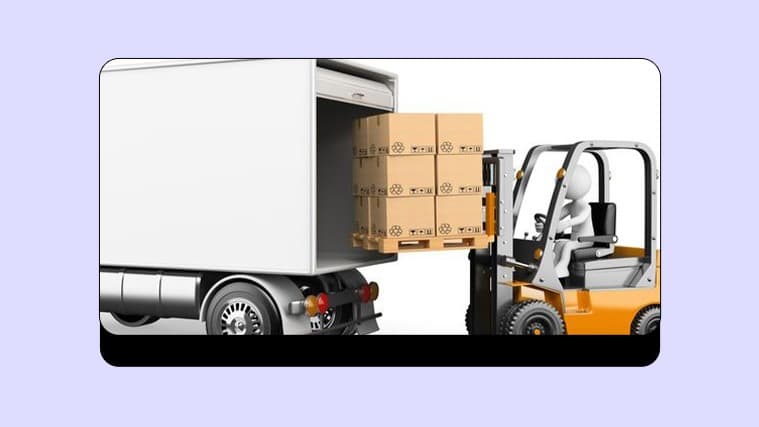
A provider may receive incoming stock, inspect and record it, assign storage locations, monitor inventory, pick products, pack orders, prepare them for dispatch, and handle returns.
A business importing consumer products through Lagos may need storage after clearance, but it may also need accurate stock records and order preparation.
What Are the Main Types of Warehousing?
1. Public Warehousing
Public warehousing uses shared space operated by a provider for multiple businesses.
It can suit companies whose storage requirements change over time because they do not need to operate a dedicated facility themselves.
Pricing may depend on space, handling, and other services.
2. Private Warehousing
Private warehousing gives a business greater control over a dedicated facility or operation.
It can suit larger businesses with predictable inventory and a need for more control.
The trade-off is greater responsibility and potentially higher fixed commitments.
3. Contract Warehousing
Contract warehousing involves a longer-term agreement between a business and a warehouse operator.
It can suit businesses that need predictable capacity and defined responsibilities.
4. Bonded Warehousing
A bonded warehouse is a specialised facility for goods held under customs control.
The Nigeria Customs Service explains that bonded warehouses licensed by the Service can hold imported goods under customs control until duties are paid or goods are re-exported.
If your business imports goods, also make sure your customs and freight arrangements are clear.
Our guide to what a freight forwarder does can help explain that part of the process.
What Services Does a Warehouse Actually Provide?
1. Receiving and Put-Away
Incoming goods need to be unloaded, checked, recorded, and placed in their assigned storage locations. Poor receiving can create inventory problems before the first customer order is even placed.
2. Inventory Storage and Management
If your team cannot confidently answer “What do we have, where is it, and what has moved?”, warehousing becomes difficult to manage.
Businesses looking to reduce manual coordination can also explore logistics automation software.
3. Picking and Packing
When an order arrives, warehouse staff need to identify the correct products, retrieve them, and prepare them for dispatch. Wrong products, missing items, or incorrect quantities can cause problems when shipped.
4. Dispatch and Distribution
After an order has been packed, it needs to leave the warehouse. Ask who handles collection, dispatch documentation, carrier coordination, and the handover to delivery.
5. Returns Handling
A provider may need to receive returned goods, inspect them, update inventory, and determine whether the item should be restocked or handled separately.
How Much Do Warehousing Services Cost in Nigeria?
There is no single warehouse price that applies to every business.
Two companies storing similar products can receive different quotes because their locations, volumes, products, and service requirements differ.
What Affects Warehousing Costs?
(a) Location: Proximity to suppliers, ports, customers, and delivery routes can affect overall cost.
(b) Storage space: More inventory requires more capacity.
(c) Product type: Fragile, valuable, hazardous, or regulated goods may require additional controls.
(d) Storage conditions: Temperature-controlled or specialised environments may require extra infrastructure.
(e) Length of storage: Holding stock for longer changes the cost profile.
(f) Receiving and handling: Frequent inbound deliveries create more labour and handling work.
(g) Picking and packing: Individual orders require work beyond storing cartons or pallets.
(h) Returns: Reverse handling adds receiving, inspection, and inventory work.
(i) Additional services: Labelling, repacking, and quality checks can affect the quote.
How to Choose the Right Warehousing Service Provider in Nigeria
1. Consider the Warehouse Location: Look at where your suppliers, customers, ports, stores, and major delivery routes are located. A lower storage cost may not be attractive if the location creates additional transportation.
2. Check the Storage Conditions: Make sure the facility suits your products. Ask about environmental controls, security, handling procedures, and sector-specific requirements.
3. Check How Orders Are Handled: Find out if the provider handles picking, packing, labelling, and dispatch. If not, account for the additional labour and coordination yourself.
4. Ask About Returns: Understand who receives returned goods, checks them, updates inventory, and decides what happens next.
5. Check Scalability: Ask what happens if stock, orders, or sales channels increase significantly. Future capacity matters if you want to avoid another warehouse change soon after moving in.
Common Warehousing Mistakes Businesses Should Avoid
1. Choosing Based Only on Price: The cheapest storage quote is not necessarily the lowest total operating cost. Errors, extra handling, and transport inefficiencies can change the calculation.
2. Not Asking What Is Included: Do not assume storage includes picking, packing, inventory management, or returns. Get the service scope in writing.
3. Outgrowing the Facility: Your warehouse needs to work for expected inventory and order volumes in cases of scaling.
How Warehousing Connects to Fulfilment and Delivery
A warehouse can have accurate inventory and picking, but the customer still needs to receive the order.
For businesses selling online, the delivery stage is part of the same operating chain.
We support delivery coordination, tracking, and logistics API integration, letting businesses connect delivery requests and updates to their own systems.
For businesses that prefer a different operating model, we also support managed delivery through an agreed workflow.
Good warehousing gets the order ready. Delivery still needs to move it to the customer and provide visibility.
Businesses can also review what a delivery app for merchants can do when evaluating the delivery side of their operation.
Conclusion
Good warehousing services do more than give your products somewhere to sit.
The right setup should match your products, inventory volume, order volume, location, fulfilment requirements, and growth plans.
It should also move from receiving to storage, picking, dispatch, and delivery easier to manage.
For larger businesses, avoid choosing a warehouse based on space or price alone.
Look at the complete operating process and the total cost of getting inventory from supplier to customer.
Once the warehouse-to-delivery handoff is clear, the next step is making delivery easier to coordinate and track.
Frequently Asked Questions
What does warehousing service mean?
It refers to activities involved in receiving, storing, managing, and preparing goods for their next stage of movement or sale. Depending on the provider, this can include inventory management, picking, packing, dispatch, and returns.
What are some examples of warehousing services?
Examples include receiving, inspection, storage, inventory management, picking, packing, labelling, dispatch preparation, and returns handling.
What should I ask a warehouse provider before signing?
Ask about location, storage conditions, inventory visibility, receiving, picking and packing, returns, scalability, responsibilities, and the complete fee structure. Also ask how the warehouse connects with your delivery process.