

5 mins read
 5 mins read
Kwikpik Logistics: Delivery App Is Solving the Last-Mile Problem
5 mins read

Ask any small business owner around about what their biggest headache is, and delivery will almost always come up.
Not making the sale, that part is often the easy bit.
It's getting the product from point A to point B without it getting lost, delayed, or disputed that keeps business owners up at night.
Nigeria's e-commerce market is booming, valued at roughly $9.35 billion in 2025 and projected to grow to $18.68 billion by 2030.
That's a massive volume of goods that need to move from sellers to buyers every single day.
But the infrastructure hasn't caught up with the demand.
This is the exact problem Kwikpik was built to solve, and understanding how it works tells you a lot about where Nigerian logistics is heading.
What Kwikpik Logistics Actually Does
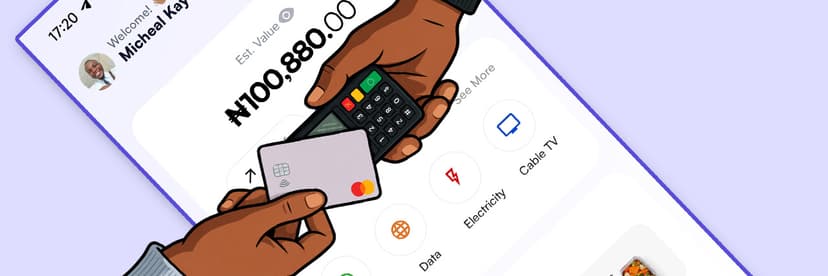
Kwikpik is a smart payment wallet and logistics management system (LMS) that helps consumers, riders, and businesses schedule and automate bill payments, money transfers, last-mile delivery, food ordering, and everyday commerce using fiat and stablecoin.
We offer an on-demand delivery service and marketplace built for Nigeria's specific delivery challenges.
Our platform has already handled a meaningful volume of activity of customers and businesses who need something delivered, packages, food, groceries, or farm produce.
We also have a network of riders who accept and complete delivery requests in real-time.
And, a tracking and payment layer that keeps everyone accountable, from pickup to drop-off.
People Also Read: Delivery Companies for Small Businesses in Nigeria
How Kwikpik Solves the Trust Problem
1. Every rider on Kwikpik is vetted and held accountable through a review system, replacing the informal "call a dispatch guy you sort of know" approach that leaves merchants exposed to stolen or lost goods.
2. From the moment a rider accepts a request, live GPS tracking begins. You see the rider move from their location to pickup, then from pickup to drop-off.
3. Delivery fees are calculated on a distance-based and weight-based structure and shown before you confirm the order. What you see is what you pay, no surprise charges added once the rider arrives.
4. Riders confirm delivery through photos, OTPs, or digital signatures, creating clear evidence that an order was completed, protection for merchants against false "I never received it" claims.
5. Our wallet and payment infrastructure, powered by Nombank (CBN-regulated and NDIC-insured), lets customers pay by bank transfer or through their wallet.
6. Our logistics services are licensed and regulated by the Nigerian Postal Service (NIPOST), giving merchants and customers the confidence that they're dealing with a legally compliant courier operation.
7. Through the business dashboard, merchants can view active and completed deliveries, track payment collections, monitor delivery timelines, and access analytics.
People Also Read: Delivery App for Merchants in Nigeria: Why Your Business Needs One in 2026
Delivery-as-a-Service: Logistics for Other Businesses
Beyond serving individual customers, we also offer an API service, allowing other apps and businesses to plug directly into our delivery network instead of building their own fleet from scratch.
This matters more than it sounds.
Building an in-house logistics operation means hiring riders, buying or renting vehicles, building route-tracking software, and managing payouts, a huge cost and distraction for a business that just wants to sell food, groceries, or products.
With an API-first model, a business can integrate delivery in a fraction of the time, while still giving customers the same real-time tracking and reliability.
For Nigeria's fast-growing but infrastructure-starved e-commerce sector, this kind of plug-and-play logistics may end up mattering more than any single delivery app, because it lets dozens of smaller businesses share one reliable delivery backbone instead of each trying to solve the same problem alone.
People Also Read: Delivery as a Service in Nigeria
What Makes Kwikpik Reliable
1. You can book a rider instantly for package delivery across Lagos, Benin City, and Abuja, with real-time tracking from pickup to drop-off.
2. Browse and order from vendors, restaurants, and stores directly within the app, with delivery handled end-to-end.
3. Order meals and groceries for same-day or scheduled delivery, and access fresh produce sourced directly from farmers, delivered to your door.
4. Pay for electricity, airtime, data, and other utility bills directly through the app.
5. Send and receive money using your Kwikpik's wallet, supporting fiat and stablecoin balances.
6. Other apps and businesses can plug directly into Kwikpik's delivery network instead of building their own logistics operation.
Conclusion
Nigeria doesn't have a shortage of demand for delivery, but a shortage of delivery that Nigerians can actually trust.
Between poor addressing systems, high failed-delivery rates, and a cash-on-delivery culture born out of necessity rather than preference, logistics has quietly become one of the biggest brakes on e-commerce growth in the country.
Our approach to solving this is by making real-time tracking, flexible wallet payments, a large and growing rider network, verifiable transaction records, and an API that businesses can build on that targets that exact gap.
If you're a customer tired of guessing when your package will arrive, or a business tired of building logistics from scratch, use Kwikpik today to solve your logistics problem.