

 5 mins read
In the modern marketplace, the distinction between "going online" and "being digital" has become the line between surviving and thriving.
More than ever, business happens online.
We see it every day.
A teenager buying sneakers on an app, a global corporation managing its supply chain through the cloud, or a local bakery using automated software to track its inventory.
While these actions all live under the digital umbrella, they represent two fundamentally different concepts which are e-commerce and e-business.
Though often used almost at the same time in casual conversation, these terms are not synonymous.
One talks about the entire digital way a business operates, while the other specifically focuses on the buying and selling of goods and services over the internet.
Understanding where one ends and the other begins is more than just a lesson in semantics.
For entrepreneurs and digital strategists, this distinction dictates how they allocate resources, scale their operations, and ultimately serve their customers.
In this article, we will break down the differences and explore how they overlap, so you get a clearer understanding of the two concepts.
What is E-business?
E-business, short for “electronic business”, refers to all the ways a business uses the internet and digital technologies to support its operations, not just selling products or services.
It covers a broad range of activities that happen online, from managing supply chains and customer relationships to automating internal processes and using digital tools for marketing and communication.
The internet becomes the backbone of most, if not all, business activities, even if those are customer-facing or not.
An e-business might operate entirely online, or it may still have physical elements but use digital technologies to run everything from inventory systems to HR processes and accounting.
The idea behind e-business is not simply to transact online, but to integrate digital tools into how a business functions and delivers value across the board.
What is E-commerce?
E-commerce, on the other hand, refers specifically to the online buying and selling of goods and services. It focuses on transactions where money changes hands using electronic systems.
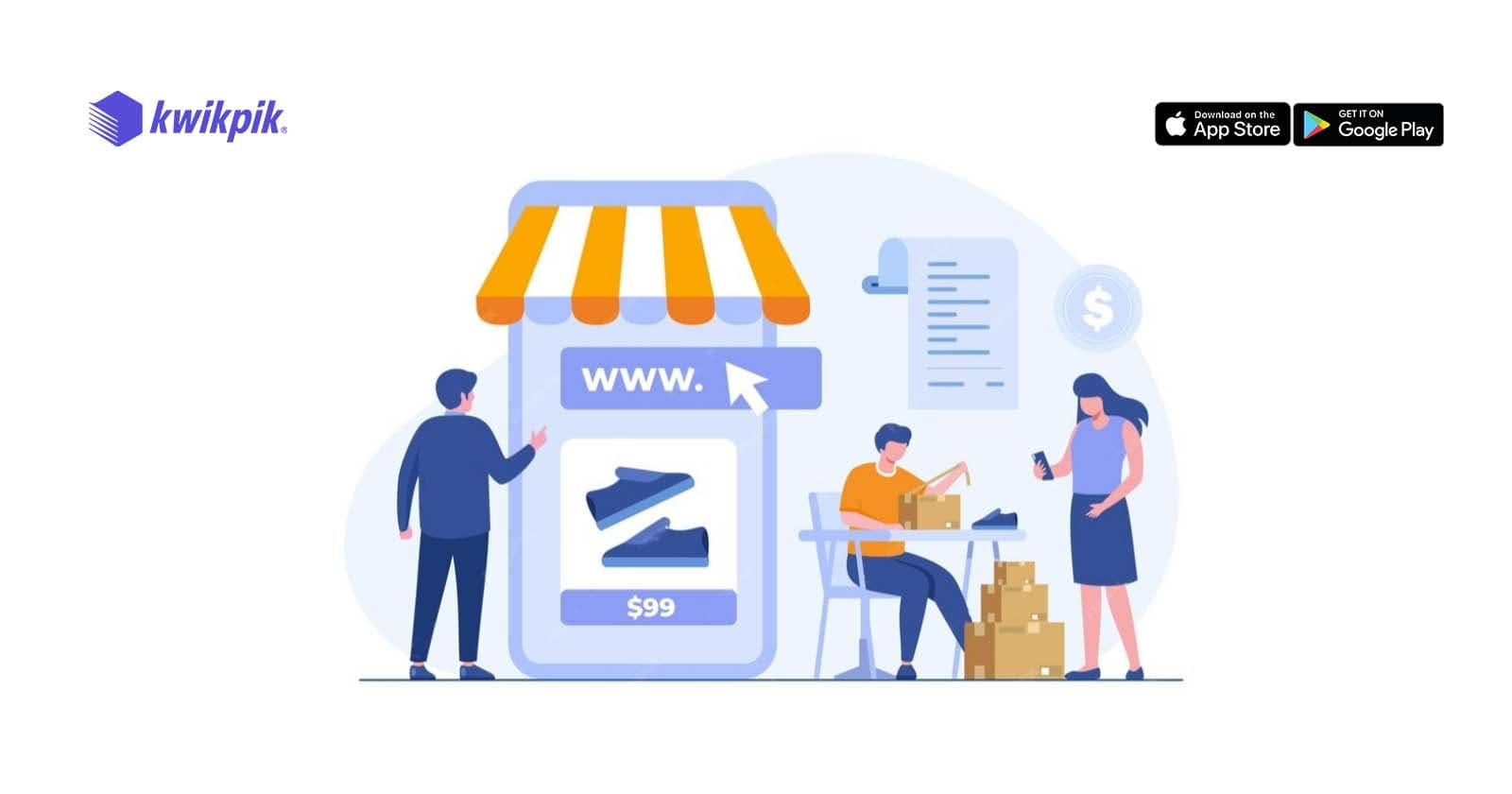
It could be a customer purchasing a pair of shoes from an online store, paying for a subscription service, or booking a ticket through a digital platform.
E-commerce is all about commerce.
The point where a business and its customers meet online to exchange money for value.
It uses websites, mobile apps, and digital payment systems to make the transactions.
While an e-commerce business might have additional online activities like email newsletters or social media engagement, those are part of the way it supports selling online, whereas the core focus of e-commerce is on facilitating transactions.
What Is the Difference Between an E-business and E-commerce?
1. Focus
E-business covers all aspects of running a business digitally.
It looks at the bigger picture of how technology strengthens communication, supply chain management, customer relationships, and revenue generation, both online and offline.
E-commerce, by contrast, focuses specifically on online transactions, such as buying and selling products or services. Basically, all e-commerce is part of e-business, but not all e-business involves e-commerce.
2. Business Activities
In e-business, activities can include online marketing, customer support, procurement of supplies, internal communication tools, and transaction processes.
It’s about how business operations are executed digitally.
E-commerce deals mainly with commerce, selling, and buying. Payment processing, shopping carts, product listings, and delivery tracking are e-commerce elements.
3. Internal vs External
E-business involves interactions both within the organisation (like human resource systems, accounting software, and internal databases) and with external stakeholders (clients, partners).
E-commerce involves the external side, the customer or client buying goods or services online.
E-business might use a company intranet or CRM system to manage workflows that customers never see, while e-commerce happens where the company meets the customer directly.
4. Technology Usage
Both e-business and e-commerce use internet technologies, but e-business often relies on a wider set of systems.
This can include tools for enterprise resource planning, supply chain coordination, customer relationship management, and data analytics, beyond just the platform that allows transactions.
E-commerce, on the other hand, focuses on technologies that enable online shopping, payment gateways, digital storefronts, and marketplaces.
5. Distinctions
An online store that sells clothes to customers through a website is an example of e-commerce.
When a business uses an online portal to manage team communication, track inventory, process payroll, and sell goods, that operation falls under e-business because it uses online systems to handle all aspects of running the business.
This distinction also helps when explaining your business model to clients, investors, or partners.
Saying your business is an e-business signals that every part of your operation embraces digital tools, while positioning your company as an e-commerce platform tells people your primary role is selling online.
Summary
E-business refers to the comprehensive use of the internet and digital technologies to conduct and manage business activities, both internally and externally. It spans everything from marketing, customer service, and supply chains to digital collaboration and data management. E-commerce, on the other hand, refers to conducting transactions, the buying and selling of goods and services online. E-commerce is majorly focused on commercial interaction between a business and its customers over the web.
E-commerce is How You Sell; Kwikpik is How You Deliver
Building a successful online presence is only half the battle.
As we’ve explored, e-commerce is the art of capturing the transaction.
You can have the most beautiful storefront and the most effective marketing strategy in the world, but if your logistics infrastructure is not a perfect fit, your growth will always hit a glass ceiling.
In a world where customers expect real-time updates and lightning-fast turnaround, you cannot rely on manual, outdated delivery methods.
We integrate directly into your business model, offering a smooth and fast delivery.
Our platform offers an infrastructure that grows alongside your order volume, ensuring that whether you are a local startup or an expanding corporation, you never outgrow your logistics.
By partnering with us, you get peace of mind that all your logistics needs will be met.
Download our app | Become a rider | Become a business partner | Visit our social channels